 I received an interesting piece of fan mail the other day from a reader
who told me that they would love to read a sequel to my debut novel, House of Sighs
someday. It delighted me, really, even though it left me scratching my head.
Honestly, a sequel had never occurred to me; I thought I’d wrapped up that
story pretty neatly. In a nice, blood-splatted bow, if you like.
I received an interesting piece of fan mail the other day from a reader
who told me that they would love to read a sequel to my debut novel, House of Sighs
someday. It delighted me, really, even though it left me scratching my head.
Honestly, a sequel had never occurred to me; I thought I’d wrapped up that
story pretty neatly. In a nice, blood-splatted bow, if you like.
But this request brought with it a niggling worm of doubt.
Perhaps the story wasn’t fully told. Maybe yes, I had more to say. House of Sighs was a novel written out
of pent-up anger, and I’ll be the first to admit: that anger hasn’t gone away …
What happened to the sole survivor on that bus ride from/into hell and what kind
of person did they grow up to become? I thought the book implied answers to a great
deal of its questions, but I underestimated the reader’s ability to imbue novels
with their hunger.
The hunger to
know more.
I get that. I really do. And who knows, maybe one day, I’ll get back on
that bus and see where it takes me.
In the interim, this all got me thinking about the notion of sequels,
and in particular, sequels to famous (or infamous) horror novels. We live in a
climate of continuing stories and retellings, which makes sense with horror, a
genre founded around the campfire, with each storyteller putting their own spin
on well-worn tales. I’m not immune to knowing what happens next, either. When
Stephen King releases Doctor Sleep,
his sequel to The Shining, I’ll be
the first in line. Guaranteed. And it’ll be a hefty hardcover purchase, too. Reading
that book in an electronic format just wouldn’t feel right to me. The scary
stuff (and I mean, the really serious shit), you want to be able to throw
across the room with a scream without running the risk of shattering it. You
don’t fuck with those ghosts.
Sequels. Some divide audiences; for every lover there are those who are
left disappointed because the questions they had so desperately wanted answered
differed from the conclusions they had drawn in their heads. And as difficult
as that latter point may be, it’s an author’s right to take the tale where he
or she deems appropriate (or inappropriate, as it may be).
So. A question is posed.
Can you think of any literary horror sequels that shook up the
collective campfire?
I’ve come up with three examples. Though be warned, there may be
spoilers in my spiels. And while my opinions may throw fuel on the fire,
revealing previous burns from authors who refused to compromise their vision, I
invite you to comment below. Let’s discuss, reader to reader.
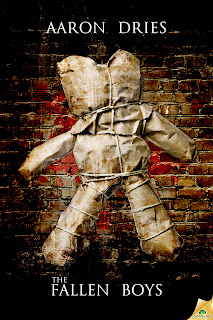
I’m a fan boy, and I write with a fan boy’s heart, which is why there
are so many nods to Robert Bloch in my newest novel, The Fallen Boys.
His influence on my work was instrumental, especially in my younger years. And
while I loved a great many of his novels and short stories, for me it was Psycho 2 that solidified Bloch in my
mind as the go-to-guy for quality plotting.
At that point in my life (I read Psycho
2 in my mid teens), my idea of horror sequels were limited to Friday the 13th installments
(often watched out of order). So the great surprise in Bloch’s carry-on
narrative was that there was a narrative present to be enjoyed in the first
place.
Enjoyed by some. Universal Studios, for example, were not in the
accolade-giving kind of mood in 1982 it would seem. That said, I understand
why. Mirrors are often at their most unflattering when they are as polished as that
particular book.
 Every line of crisp prose, every wit-laced piece of dialog … Bloch
layered it all on. He took horror-slasher conventions and turned them on their
heads by setting Norman on the road to Hollywood in an attempt to end a movie adaptation
of his life and exploits at the Bates Motel (predating the plot of Scream 2 by many years). And the
Hollywood of Bloch’s novel is not a flattering place; it’s an unredeemable
wasteland, bleached by the harsh Los Angeles sun and sucked dry of any
identifiable creativity. Added to this, there’s an utterly shocking Third Act
twist, which to this day, keeps me reeling. It’s a deft slash of the Master’s knife,
and despite all temptations to do otherwise … I won’t reveal it’s controversial
majesty here.
Every line of crisp prose, every wit-laced piece of dialog … Bloch
layered it all on. He took horror-slasher conventions and turned them on their
heads by setting Norman on the road to Hollywood in an attempt to end a movie adaptation
of his life and exploits at the Bates Motel (predating the plot of Scream 2 by many years). And the
Hollywood of Bloch’s novel is not a flattering place; it’s an unredeemable
wasteland, bleached by the harsh Los Angeles sun and sucked dry of any
identifiable creativity. Added to this, there’s an utterly shocking Third Act
twist, which to this day, keeps me reeling. It’s a deft slash of the Master’s knife,
and despite all temptations to do otherwise … I won’t reveal it’s controversial
majesty here.
And like some readers, Universal Studios (who had bought the rights to
the book in advance) didn’t like the twist, and they especially didn’t like the
way Bloch depicted the Hollywood of the time. As a result, they went off and
made their own sequel instead (which when you look at it, is a semi-remake of
the 1964 film Strait-Jacket – written
by none other than Robert Bloch himself!). It was as though Hollywood was
determined to never give the author of Psycho
the reputation he had so undeniably earned (beginning with Hitchcock buying all
available copies of Bloch’s original novel so nobody would know the ending, and
continued by Joseph Stefano, who seemed to self-credit himself with so many of
the novel’s cleverest plot devices (not to say he didn’t contribute a lot,
because he did)).
But I digress. The novel is a merciless read and wildly satirical; it’s
camp in all the right places, while still managing to be scary exactly when it
should be. Added to this, there are enough Blochian puns to keep any fan going.
Psycho 2 is a sardonic fuck you to an
industry that had taken Bloch’s ideas and run them into the ground, over and
over and over again.

Second on this list of controversial sequels is Ira Levin’s Son of Rosemary (1990), which was
published 30 years after his seminal classic, Rosemary’s Baby. Set in 1999, on the cusp of the new millennium,
the novel continues the story of Rosemary Woodhouse, who awakens in a long-term
care facility after the death of the last member of the coven who worships her
son. She learns she has been in a (perhaps supernaturally induced) coma since
1973, and whilst lost in dreamland, her son, Andy (he with his father’s golden
eyes) has become a Kennedy-esque super star. But does this rise to fame come
with an agenda? And will Rosemary be welcomed back into his fold?
In a career that spanned 44 years, Levin only wrote seven novels and
this was his last. It’s sad that this final novel proved to be such a
frustrating footnote in an otherwise consummate catalog. That’s not to say that
it’s terrible, because it isn’t. It’s just bitter through and through. It plays
its demonic cards well, but collapses under the weight of its surprisingly
sluggish pace, which only leads to a denouement we know will come (it really
only becomes a horror novel in its final pages) — only to be followed by a
mischievous plot maneuver that either confirms Levin as a genius or a literary
madman. After even all of these years later, I still haven’t quite made up my
mind.
But you have to read it and feel your stomach empty out as that tricky
card is played. And then come back here and let me know what you think. Some
will be confused; some may be intrigued; but almost any fan will be angry. On
that note, I think anger is a powerful emotion for any book to evoke. And I can’t
believe that after all of these wonderfully constructed novels, that Levin
would descend into hackery in the final pages of his final book. I just can’t. I won’t. That’s why I think (or maybe
it’s hope) that there is a mastermind at play in Son of Rosemary’s climax (and the more I think about it, the more I
think it might be — but that doesn’t mean I think it was the right decision to
make).
Time has unfortunately swallowed this novel whole, as though it would
rather concede that it never existed (and time wouldn’t be alone there, I’m
sure). And all faults aside, this is a shame. Ira Levin wrote Rosemary’s Baby, one of the greatest
horror novels ever written and he alone made the decision to continue that
story. Just because people didn’t like it doesn’t mean that future readers
should be forced to raid budget bins in the hope of finding a copy, and thus,
make up their own minds (though fortunately, the novel has been reprinted).
I wonder what Mia Farrow, to whom the book is dedicated, thought?

The third and final novel I’ll raise here is Thomas Harris’ sequel to
his blockbuster novel, The Silence of the
Lambs. Yes, I’m referring to that mammoth volume of depravity and twisted
elegance: Hannibal.
I was in the ninth grade when it was released and I can still remember
sitting down to read it for the first time and letting my eyes run across the
first eerie sentence …
“You would
think that such a day would tremble to begin.”
Harris had me at hello. And he kept me all the way to the end.
“We can only
learn so much and live.”
Strung between these two sentences was a novel that changed the way I
perceived popular fiction, and more than any other book, solidified in my mind
that yes, this was what I want to do with
my life. I want to write, create and perhaps even disturb or upset. Because
that is what that book did to me. I remember feeling hollowed out by its
uncompromising final 100 pages. They left me gasping. I remember shaking my
head and thinking to myself, “No — he couldn’t. Surely not.”
And yet he did.
I hated it. I couldn’t sleep that night. It was as though I’d suffered
an electric shock. The book was a drug upon which I’d overdosed, leaving me a
paler shade of myself, trapped in cannibalistic comedown. And like the worst
comedowns, it made me want to cry.
Those who have read the book (and not only just seen the film, which
differs greatly) will know the turn of events I’m referring to here …
It took me a great deal of time to appreciate Hannibal, although never once in that bitter hiatus was I ever not
tempted to pick it up again. It called out to me, luring me closer and closer
to its pages, a demonic lullaby that I’m sure would have satisfied Mr. Harris
greatly. And when the time came, and I felt ready to re-read it, I did so in an
epic single setting — an utterly unique experience. I saw the dance of the
prose, the tight plot mechanisms turning me closer and closer to a conclusion I
knew was going to happen, yet I wanted so badly to avoid.
I don’t subscribe to the idea that Hannibal Lecter was scarier with his
motives withheld. People often described him as a shark, prowling the oceans, merciless
and mean … I disagree. Sharks are creatures that eat in order to survive; they
don’t hunt people down. There is almost a blind innocence to their carnage.
We’re more
terrifying.
By giving Lecter a backstory — by humanizing him — Harris drew a
powerful contrast between the titular character and the ghoulish atrocities he
enacted. As a reader, I found myself forced into a dark corner, forced to empathize
with a monster, who not only destroyed those who deserved to die, but would
break the one person Harris was not allowed to break: Clarice Starling. Harris
forced us to not only look into the abyss, but to look out at the world from
within it.
The Silence of
the Lambs was about a number of things, but primarily, it was Starling’s
story. There’s a wonderful, fragile tenderness to it, which grows bolder and
bolder as the story progresses, eventuating in a plot that reflects its primary
character: utterly victorious and incorruptible. So why were people surprised
that its sequel would be a very different beast? It was, after all, called Hannibal. Its core isn’t the
incorruptible; it’s the utterly corrupt. It isn’t a novel about the victor or
the victim; it’s about The Evil, which has a hefty reputation to uphold. The
book is an insight into Lecter’s mind, as embodied by a story that more-than-adequately
reflects that character’s sensibility, just as The Silence of the Lambs did so for Clarice … And that’s why so
many reacted to this book so vehemently. I was among your number, trust me.
Evil corrupts even the incorruptible, which is what had to happen in order for Hannibal to succeed.
It just comes at an incredibly high literary cost.
And just like that — I was changed.
These three entirely unrelated books share a kinship, despite their
flaws. They are novels that remind me of the power an author has over a reader.
And that’s their right to do so; Bloch, Levin and Harris have earned their clout.
If they want to hurt, punish and aggravate you, then accept it, because these
are not authors in the business of handing out mercy. But remember: that doesn’t
mean you have to like it. And one need only scan the Amazon and Goodreads
reviews for these three books to see that many don’t.
Psycho 2, Son of Rosemary and Hannibal are examples of sequels that are hard to accept because
they are such vivid departures from their original narrative threads. And those
threads do run deep, which is why I admire them so strongly. It would have been
so easy for any one of these authors to rehash the same story and satisfy an
undemanding audience. Instead, they pull on those deeply seeded cords and yank
them up through our ever-so-tender flesh, hurting us. Punishing us for their
loyalty.
That’s horror for you right there.
* * *

Former pizza
boy, retail clerk, kitchen hand, aged care worker, video director and copywriter,
Aaron Dries was born and raised in New South Wales, Australia. When asked why
he writes horror, his standard reply is that when it comes to scaring people,
writing pays slightly better than jumping out from behind doors. His first
novel was the award-winning House of Sighs,
followed by the recently published, The Fallen Boys,
which manages to be just as –if not more–twisted than his debut. He is
currently hard at work on a third book.
Feel free to
contact him at www.aarondries.com (http://www.aarondries.com),
on Facebook
or through Twitter.
He won’t bite. Much.


 In the website space in "profile settings" I inserted the link to where readers can buy my book:
  Today I'm focused on searching for key words in the Twitter search. If there's a certain author in the same genre that you write, then do a search on the author's name. This brings up a list of everyone talking about this author and their books. Those tweeters would be good ones to follow because they have an affinity for your niche. For my genre, I might do a search for a popular horror author or key words like zombies, werewolves, ghosts, vampires, supernatural, or horror novels to find my audience.
  This will take me to a results page with people talking about horror novels. I scan the tweets on this search list and read not only their tweets, but their bios as well. I look for key words in their bios like: avid reader, love reading, book junkie, love horror, or love Stephen King. These are the booklovers that I choose to connect with.
 Here are some tips on how to use Twitter to market your books and blogs and build your audience. For those who are new to Twitter, it's a social media site where you set up a profile and post short messages about what you're doing. These messages are called "tweets." People from all around the world can "follow" you and read every message that you post. Just about every celebrity imaginable now uses Twitter to give their fans a personal connection. Twitter is also great for authors connecting with their readers. This is a goldmine for marketing books and blogs.